

Design sprints have a bit of a reputation problem in software teams. For some, they feel like a week of sticky notes and abstract exercises that delay development. For others, they look like creative theatre with a big reveal at the end but little real clarity. A well-run design sprint is none of that. When structured properly, it reduces delivery risk, aligns designers and developers, and gives teams a clearer path forward before code is written. The real value is not the workshop itself, but the shared understanding it creates for what development should build next.
The Fear Around Design Sprints Is Understandable
In many software agencies, the question is not “What is a design sprint?” It is “Will this slow us down?”
Developers are measured by velocity. Agencies are measured by delivery. No one wants a process that feels indulgent or disconnected from shipping real features.
That concern is reasonable. Poorly structured design sprints do create confusion. They front-load creativity but leave technical feasibility unresolved. The result is friction during implementation, not clarity before it.
Research from the Standish Group’s CHAOS Report has consistently shown that unclear requirements are one of the leading causes of project failure and budget overruns. A design sprint that fails to define scope and expectations clearly will not prevent this risk. It will amplify it. A good design sprint exists to solve that problem.
What Design Sprints Are Not

A good design sprint is not a performance. It is not a five-day workshop that ends in a dramatic presentation and applause. It is not designers working in isolation while developers wait for “the big reveal.” It is also not a replacement for technical planning.
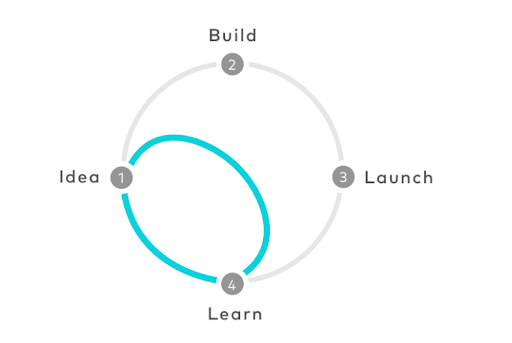
The original Google Ventures Sprint framework, introduced by Jake Knapp and the GV team, was designed to compress decision-making and test risky assumptions early. It was never intended to be decorative or theatrical. Its core purpose was speed with structure.
When teams treat design sprints as inspiration sessions rather than alignment sessions, they miss the point. The real value is not in generating ideas. It is in deciding which ideas should move forward and which should not.
Source: Google Ventures Sprint Framework
The Structure That Works for Software Teams
A practical design sprint for a dev-focused team typically follows a predictable rhythm.
It begins with problem definition. The team aligns on user behavior, business goals, and technical constraints. This stage often feels less creative, but it is where risk is reduced most effectively. Developers are involved early so that feasibility questions surface before solutions harden.
The next phase focuses on structured exploration. Ideas are generated within boundaries, not in a vacuum. Flows are sketched with system logic in mind. Edge cases are discussed early. Assumptions are challenged.
By mid-sprint, ideas move into high-fidelity prototypes. These are not aesthetic exercises. They are behavioral tests. The goal is to simulate real interactions so the team can validate usability and feasibility before development resources are committed.
This approach aligns with findings from McKinsey’s 2018 “Business Value of Design” report, which showed that companies integrating design early in product development significantly outperformed industry benchmarks in revenue growth and shareholder returns. The key factor was not visual polish. It was cross-functional integration and early decision clarity. When developers and designers collaborate throughout the design sprint, that integration becomes practical, not theoretical.
How Designers and Developers Collaborate During a Sprint

In many teams, friction arises not from disagreement but from timing. Developers are often brought into the conversation after design decisions are already made. That delay creates reinterpretation during build.
In a well-structured design sprint, developers review flows while they are still fluid. They flag technical dependencies, integration realities, and performance concerns before anything is finalized. Designers adjust accordingly. The process becomes iterative rather than reactive.
This kind of collaboration reflects principles from Agile and Lean product development, where early feedback loops are essential. The Agile Manifesto emphasizes responding to change over following a fixed plan. A good design sprint operationalizes that mindset before code begins. The result is not fewer discussions. It is earlier discussions.
What Developers Should Receive at the End
At the end of a strong design sprint, developers should not receive a mood board or loosely connected wireframes. They should receive clarity.
That includes defined user flows, resolved interaction logic, documented edge cases, and high-fidelity UI that reflects real system behavior. They should understand not only what is being built but why specific decisions were made and which problems are intentionally out of scope for the current phase.
Ambiguity during handoff is one of the primary sources of delivery friction. Clear documentation and aligned understanding reduce the need for mid-build reinterpretation. The goal is not perfection. It is confidence.
The Real Outcome of a Good Sprint
A good design sprint does not slow development. It shifts uncertainty forward in the timeline, where it is cheaper to resolve.
Studies on cost-of-change curves in software engineering, including early research by Barry Boehm, show that the cost of fixing issues increases dramatically the later they are discovered in the development lifecycle. By clarifying requirements, flows, and assumptions early, design sprints reduce downstream cost.
They also protect morale. Developers can focus on execution instead of redesigning experiences inside their code editor. Agencies can scope more confidently. Clients experience fewer “This isn’t what we imagined” moments late in the cycle. That is the real value of a design sprint. Not creativity for its own sake, but delivery stability.
A good design sprint does not slow development. It shifts uncertainty forward in the timeline, where it is cheaper to resolve.
This Is How We Run Sprints With Our Agency Partners
When we run design sprints with software agencies and SaaS teams, the objective is simple: create clarity that survives contact with development.
We involve developers from day one. We structure exploration within technical boundaries. We validate before committing build resources. And we end with build-ready direction, not conceptual ambiguity. Because a good design sprint is not about producing impressive slides. It is about protecting delivery.
If your last design sprint felt chaotic or disconnected from development realities, the issue was likely structure, not the concept itself. With the right structure, a design sprint becomes one of the most practical tools a software team can use.
If you’re curious how we structure these design sprints with our agency partners, we’re always open to a conversation. Book a FREE discovery call with us.