
The UX Deliverable That Creates Clarity Long Before Development Begins
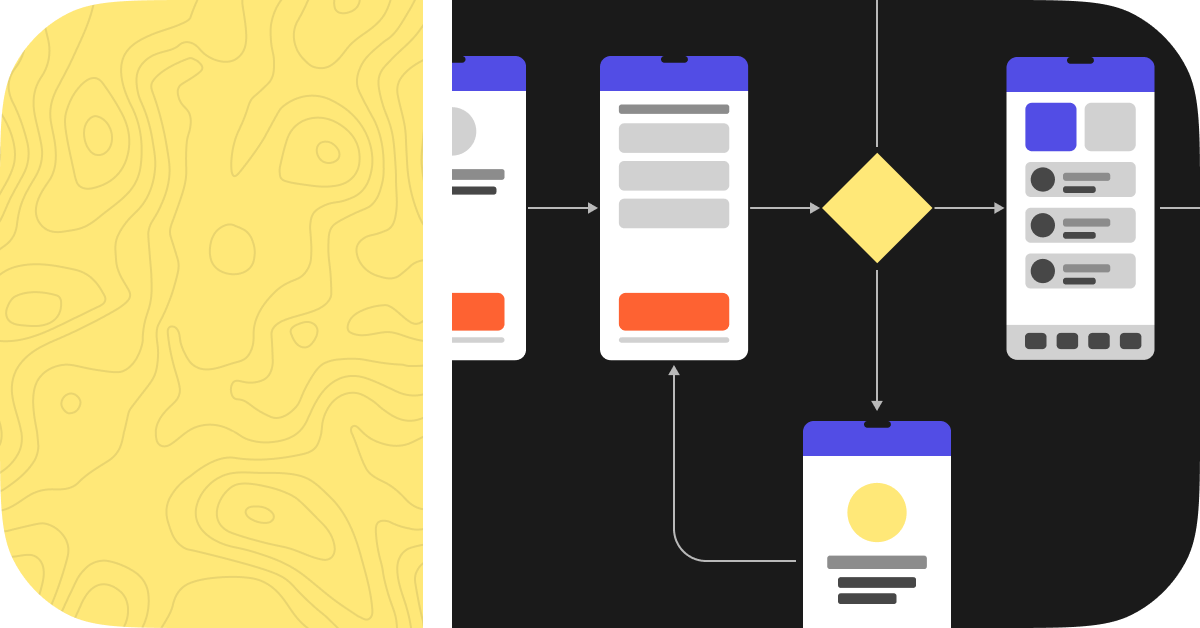
Screens show what happens. Wireflows show why it happens. While polished UI designs often receive the most attention during product discussions, many developers will tell you that some of the most valuable UX deliverables are the ones that explain how everything connects together. Wireflows help teams understand the relationships between screens, decisions, workflows, and user actions before development begins. The result is greater clarity, fewer assumptions, and a smoother path from design to implementation.
If you’ve ever watched a development team review a set of polished designs, you’ve probably heard some version of the same question.
“Okay, but what happens next?”
The screen itself may look complete. The layout is approved. The visual design communicates exactly how the interface should appear. Yet developers are often trying to understand something much larger than a collection of screens. They need to understand how users move through the experience, what decisions trigger different outcomes, what happens when something goes wrong, and how the entire workflow fits together.
This is where many projects begin to encounter friction.
The designs may be finished from a visual perspective, but important questions remain unanswered. Teams start filling gaps with assumptions. Developers interpret workflows one way while stakeholders imagine something else. Product teams discover edge cases that were never discussed. None of these situations occur because people are doing bad work. They happen because understanding a product requires more than understanding what individual screens look like.
Over the years, we’ve found that one of the most effective tools for solving this problem is surprisingly simple: wireflows.
Why Screens Alone Rarely Tell the Whole Story
One of the biggest challenges in software delivery is that users do not experience products one screen at a time. They experience workflows.
A customer does not think about a login screen, a dashboard screen, and a settings screen as separate pieces of a product. They think about accomplishing a task. They sign in, complete an action, review information, make decisions, and move toward a goal. Their experience is defined by how those moments connect together, not by how individual screens look in isolation.
This is why reviewing screens on their own can sometimes create a false sense of completeness. A design may communicate what a screen should contain, but it does not automatically explain how users arrive there, what happens after they leave, what triggers different outcomes, or how the system should respond when something unexpected occurs.
Consider something as simple as a registration process. Looking at the registration screen alone does not explain what happens if a user already has an account, enters invalid information, abandons the process halfway through, or fails verification. Those scenarios often represent a significant portion of the implementation effort, yet they may not be obvious when reviewing static screens.
Wireflows help solve this problem by connecting the screens to the journey itself. They allow teams to see how users move through the experience, where decisions occur, and how different pathways influence outcomes. Instead of reviewing isolated artifacts, teams begin evaluating the product as a complete experience.
Why Developers Find Wireflows So Valuable
One of the biggest causes of delivery friction is interpretation.
Whenever information is incomplete, people naturally fill in the gaps. Product managers fill them in one way. Designers fill them in another. Developers may interpret the same workflow differently again. Everyone is acting with good intentions, but the result is often multiple versions of the same experience existing in different people’s minds.
Wireflows help reduce that ambiguity because they make the logic visible. Rather than asking teams to infer how screens connect together, the relationships are documented and shared. Developers can see how users move through a workflow, what decisions affect outcomes, where information enters the system, and how different scenarios should be handled.
This context is incredibly valuable during implementation. Developers are not simply building screens. They are building workflows, logic, conditions, validations, transitions, permissions, and behaviors. The more clearly those elements are understood before development begins, the fewer assumptions developers need to make during implementation.
In our experience, developers rarely ask for more documentation. What they ask for is more clarity. Wireflows help provide that clarity by creating a shared understanding of how the product is intended to work before code is written.
Wireflows Surface Problems Before Development Does
One of the most overlooked benefits of wireflows is their ability to reveal what has not yet been considered.
As teams walk through a workflow together, questions naturally emerge. What happens if a user skips this step? What happens when required information is missing? How should the system respond if an action fails? What changes when different permission levels are introduced? How should the experience adapt when real-world complexity enters the picture?
These conversations often expose gaps that would otherwise remain hidden until much later in the project. In many cases, wireflows become less of a documentation tool and more of a discovery tool. They encourage teams to think beyond the happy path and explore the realities of how people actually use products.
We’ve seen wireflow reviews uncover missing requirements, conflicting assumptions, workflow inefficiencies, and edge cases that nobody realized existed. While those discoveries can sometimes create additional conversations during planning, they are far less disruptive than discovering the same issues halfway through development or after launch.
That is one of the reasons wireflows tend to create better delivery outcomes. They help teams address uncertainty while change is still relatively inexpensive.
Why Wireflows Matter Even More in an AI-Assisted Development World
As software development continues to evolve, the value of clarity continues to increase.
AI-assisted development tools such as Claude Code, Cursor, GitHub Copilot, and similar platforms are helping teams move from idea to implementation faster than ever before. Developers can generate code, explore solutions, and build functionality at a pace that would have seemed unrealistic only a few years ago.
While this creates enormous opportunities, it also changes the economics of ambiguity. When development accelerates, unclear thinking accelerates with it. Teams can implement the wrong workflow more efficiently than ever before if the underlying logic has not been properly defined.
This is why artifacts such as wireflows are becoming more important rather than less important. AI can help teams build faster, but it still relies on the quality of the information it receives. Clear workflows, documented logic, and shared understanding remain essential because they provide the foundation that both developers and AI-assisted tools depend on.
The faster implementation becomes, the more valuable clarity becomes.
How Pepperplane Uses Wireflows
At Pepperplane, wireflows are often one of the most valuable tools we use during discovery, UX planning, and product design because they help create alignment long before development begins.
Rather than treating wireflows as documentation for documentation’s sake, we use them as a way to facilitate conversations, uncover assumptions, validate workflows, and build confidence around implementation. They help product teams understand the user journey, help stakeholders visualize how decisions affect the experience, and help developers understand how different parts of the system connect together.
Our goal is not to create more deliverables. Our goal is to create more understanding.
When teams share a common understanding of the experience they are building, communication improves, implementation becomes more predictable, and delivery tends to move much more smoothly. In many ways, that alignment is where the real value of wireflows lives.
Final Thought
When people think about UX deliverables, they often focus on the screens because they are the most visible part of the work.
The reality is that some of the most valuable design thinking happens between the screens. That is where workflows take shape. That is where dependencies become visible. That is where assumptions are challenged, decisions are clarified, and teams begin building a shared understanding of how the product should actually work.
Wireflows help make those connections visible. They reduce interpretation, improve implementation accuracy, surface missing logic, and create alignment across product, design, and development teams before significant resources are committed.
In a world where software is being built faster than ever before, clarity remains one of the most valuable assets a team can have. Wireflows are one of the simplest and most effective ways to create it.
Explore Your Design Capacity
If your team is struggling with implementation surprises, unclear requirements, stakeholder misalignment, or constant questions during development, the challenge may not be execution. It may be a lack of shared understanding.
Our Design Capacity Scorecard can help identify gaps in your product and design process while uncovering opportunities to improve collaboration across your team. Or, if you’d like to discuss your next project, we’d love to explore how Pepperplane helps software teams create clarity before development begins.