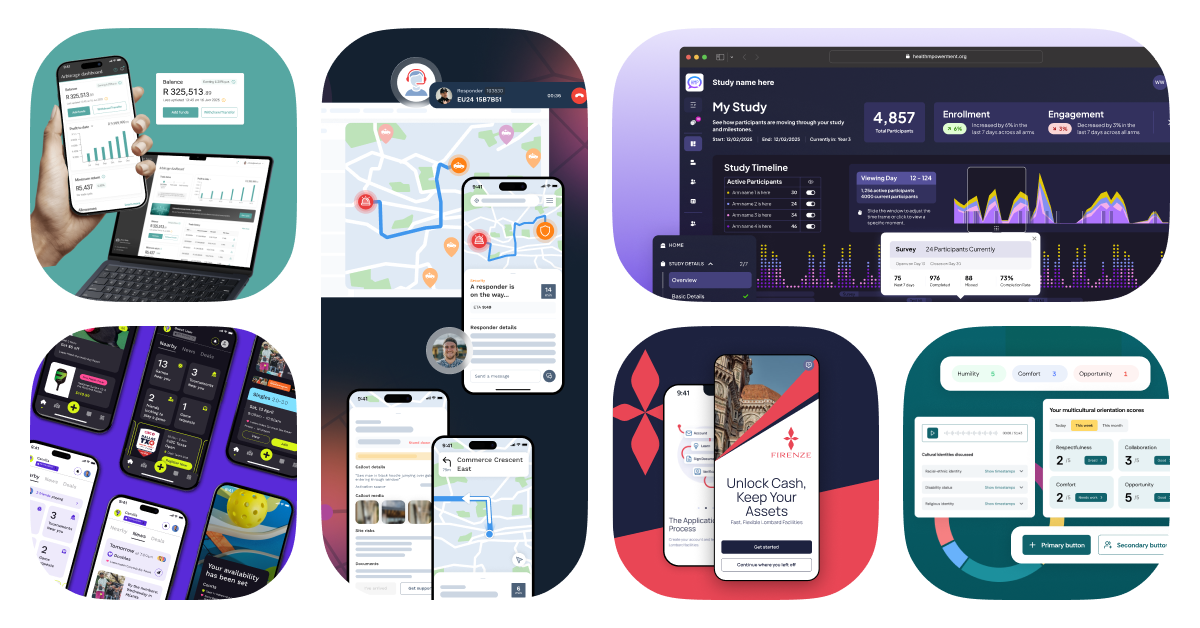
The Hidden Sales Tool Most Agencies Ignore
Why Every Project You Deliver Is Also Your Next Sales Conversation Most agencies invest heavily in marketing, networking, and business development to attract new clients.

Why Every Project You Deliver Is Also Your Next Sales Conversation Most agencies invest heavily in marketing, networking, and business development to attract new clients.

Why UX Improves Team Collaboration Before It Improves the Product When organizations invest in UX, they often expect to see improvements in the product itself.
Why UX Improves Client Relationships as Much as It Improves Products When people think about the value of UX, they often focus on the product.

Why the Biggest Wins Often Happen Behind the Scenes When teams invest in UX, they often expect success to be measured by a polished interface

Why Great UX Creates Value Long After a Project Is Delivered When teams invest in UX, the immediate goal is usually to improve a single

Why the Best Agency Relationships Are Built on Better Questions, Not Better Deliverables Most software agencies don’t set out to become vendors, yet many unintentionally

When Everyone Can Build Faster, Better Thinking Becomes the Competitive Advantage Artificial intelligence is changing the way software gets built. Development is becoming faster, production

Why Great Discovery Conversations Focus on Outcomes, Not Just Features The quality of a software project is often shaped long before a proposal is written

Why Great UX Deliverables Go Far Beyond UI Screens Good UX deliverables go far beyond UI screens. Developers need context, workflows, interaction logic, and clear decision-making guidance to build confidently. The strongest UX teams help reduce ambiguity before development begins, creating smoother delivery and better product outcomes. The Problem With

Why Better Scoping Creates Better Delivery Most software projects do not struggle because teams lack talent. More often, problems begin much earlier. In rushed discovery calls. In assumptions that go unchallenged. In proposals built before enough clarity exists around the actual problem being solved. By the time delivery starts, those

Bringing in a UX partner can feel like adding another layer to an already complex delivery process. More coordination, more moving parts, and more potential for misalignment. In practice, the right UX partner does the opposite. Instead of slowing things down, it reduces friction by clarifying decisions earlier, aligning teams
A Transparent Look at How We Start Working With Software Teams Most agency onboarding experiences sound polished from the outside. A kickoff call happens, access is exchanged, and work begins somewhere behind the scenes. What is often missing is visibility into how the relationship actually takes shape during those early

What Tuesday Looks Like When UX Is Inside the Pod, Not Outside It One of the biggest misconceptions about working with a UX partner is that design happens somewhere separate from delivery. Screens are created in isolation, handed off, and then interpreted by development later. In reality, the most effective

A Practical Look at How Clarity Changes the Conversation Before a proposal is written, most software agencies rely on what is available in the moment. A feature list, a timeline, and a high-level understanding of what the client wants to build. In many cases, that is enough to move forward,

Most first calls between agencies and clients follow a familiar pattern. The conversation starts with features, timelines, and scope. The focus quickly shifts to what needs to be built and how fast it can be delivered. While this creates momentum, it often skips over the questions that actually shape whether

Most software agencies introduce UX after the scope is signed and development is about to begin. By that point, many of the most important decisions have already been made. When UX is brought into the process earlier, it changes how projects are defined, how proposals are structured, and how clients