Why Shared Understanding Creates Better Products and More Predictable Delivery
Most software projects do not struggle because teams lack talent, effort, or technical expertise. More often, projects become difficult because different people are solving different versions of the same problem. User story mapping is often viewed as a planning exercise, but its greatest value lies elsewhere. It helps product managers, designers, developers, and stakeholders build a common view of the user experience before delivery begins, reducing assumptions and creating a stronger foundation for execution.
“Most software teams don’t have a feature problem. They have an alignment problem.”
I’ve sat in enough project kickoffs to know that alignment is one of the most misunderstood concepts in software development.
Most teams assume they’re aligned because everyone attended the same meeting. The product owner shared the vision, leadership approved the budget, design started exploring solutions, and development reviewed the requirements. Everyone leaves the room feeling confident that they’re working toward the same goal.
Then a few weeks later, the cracks begin to appear.
Design presents a workflow that seems perfectly reasonable. Development raises technical considerations that were never part of the original discussion. Product realizes there are business requirements that haven’t been accounted for. Stakeholders start asking questions that reveal they were imagining something entirely different from what the team has been building.
Nobody is doing bad work. Nobody is intentionally creating confusion. The reality is much simpler than that. Everyone is looking at the project through a different lens.
Over the years, we’ve found that many software teams don’t have a feature problem. They have an alignment problem. One of the most effective ways we’ve found to solve that problem is through user story mapping. Not because it helps organize features, but because it helps teams build a shared understanding before delivery begins.
Why Product, Design, and Development Often See Different Projects
One thing we’ve consistently observed across software projects is that every discipline naturally approaches the work from a different perspective. Product teams are often focused on business goals, customer needs, and market opportunities. Designers tend to think about workflows, usability, and how people move through an experience. Developers are evaluating technical architecture, dependencies, and implementation complexity, while leadership is usually looking at timelines, budgets, and broader business objectives.
None of these perspectives are wrong. In fact, they are all necessary. Great products are built when all of these viewpoints are represented. The challenge is that they do not automatically align themselves. Without deliberate effort, people can leave the same meeting with very different assumptions about what is being built and why.
I’ve been in workshops where everyone agreed on the objective but had completely different assumptions about how users would accomplish it. I’ve watched teams spend hours discussing requirements only to discover later that they were visualizing entirely different workflows. It is surprisingly common for people to attend the same meeting, agree on the same goal, and still walk away imagining different versions of the product.
When that happens, misalignment rarely becomes obvious immediately. It often stays hidden during planning and only reveals itself later when decisions need to be made, designs need to be approved, or development begins uncovering edge cases that nobody discussed. By that point, the cost of getting everyone aligned is significantly higher than it would have been during discovery.
What User Story Mapping Actually Does
Many articles describe user story mapping as a planning framework. While that’s technically true, that definition misses the most valuable part of the exercise.
The greatest value isn’t the map itself. It’s the conversation that happens while the map is being created.
When a team builds a user story map together, the discussion naturally shifts away from individual features and toward the user’s experience. Instead of immediately debating functionality, priorities, or technical requirements, people start talking about what users are actually trying to accomplish. They begin asking questions about where the journey starts, what information users need, what decisions they’re making, and what happens when something doesn’t go according to plan.
Those questions create a very different type of conversation. Rather than viewing the product as a collection of requirements, the team begins looking at it as a connected experience. People start identifying dependencies, assumptions, and gaps in understanding before they become delivery issues.
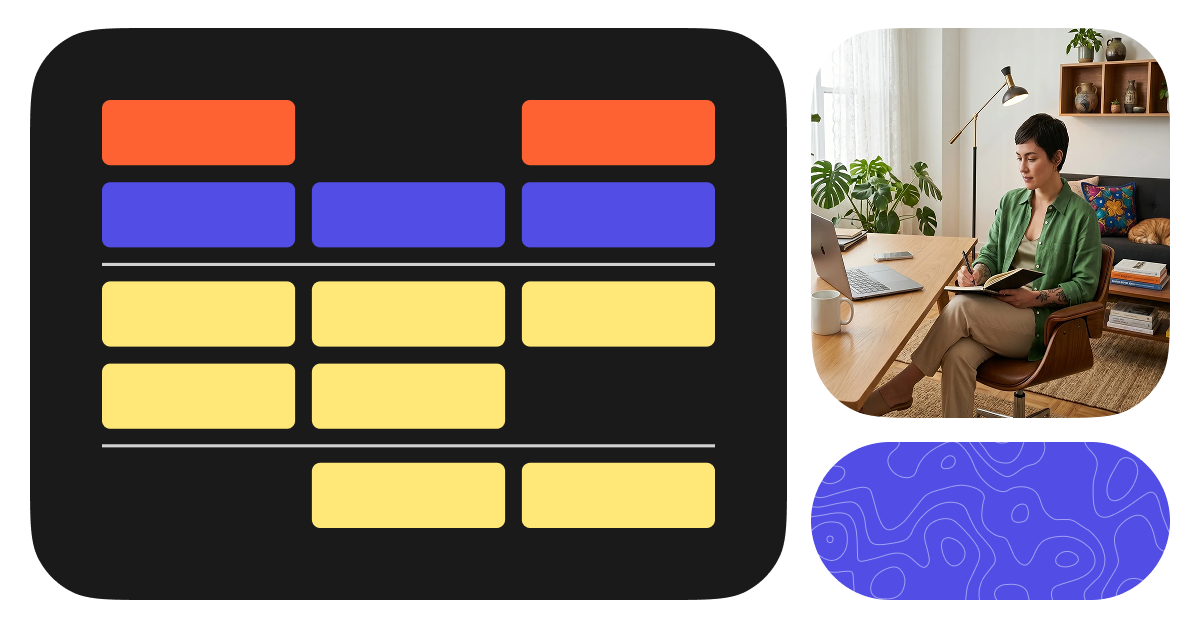
We’ve found that story mapping creates a shared visual language that allows product, design, development, and stakeholders to collaborate around the same journey. Instead of interpreting requirements independently, teams gain a common reference point that guides decision-making throughout the project. That is why we’ve never viewed user story maps as simply a planning tool. They are alignment tools disguised as planning tools.
How User Story Mapping Surfaces Hidden Assumptions
If there is one thing that consistently creates problems in software delivery, it is assumptions. The challenge is that assumptions rarely feel like assumptions when a project is getting underway. They feel like facts. A product team assumes users will follow a particular workflow. A stakeholder assumes a process is already understood because it was mentioned briefly during a kickoff meeting. A developer assumes a feature only needs to support a specific scenario because nobody has discussed alternatives.
The consequences usually do not appear immediately. During planning, everything can feel aligned. Requirements seem clear, timelines appear reasonable, and teams move forward with confidence. It is often only later, when designs are being reviewed or development begins uncovering edge cases, that those hidden assumptions start to surface.
We’ve seen teams spend significant time designing and building functionality only to discover that key stakeholders envisioned something entirely different. We’ve seen developers deliver exactly what was documented while stakeholders insisted the outcome was not what they expected. In situations like these, nobody necessarily made a mistake. The issue was simply that important assumptions remained invisible for too long.
This is one of the reasons user story mapping is so valuable. As teams walk through the user’s journey together, questions naturally begin to emerge. What happens if a user skips a step? How does information move through the system? What happens if approval is denied? What should happen when required information is missing?
Those conversations often reveal gaps that would otherwise remain hidden until much later in the project. Finding those gaps during discovery or planning is dramatically less expensive than discovering them halfway through development, during QA, or after launch. By creating space for teams to challenge assumptions early, user story mapping helps prevent uncertainty from becoming expensive rework later.
How User Story Mapping Improves Estimates and Planning
One benefit of user story mapping that does not get discussed often enough is its impact on estimation. Most teams understand that user story maps help organize work, but their value goes much deeper than creating a backlog structure. In practice, they help teams build a shared understanding of what is actually being estimated.
Without that shared understanding, estimates can vary dramatically. A product manager may see a straightforward enhancement. A developer may see integrations, dependencies, technical risks, and implementation complexity. A designer may recognize workflow challenges that have not yet been discussed. Each person is looking at the same initiative but seeing a different version of the work.
I’ve seen teams spend hours debating estimates when the real issue was not the estimate itself. The underlying problem was that people were estimating different assumptions, different workflows, and sometimes entirely different experiences. Once the team stepped back and mapped the user journey together, many of those disagreements disappeared naturally because everyone was finally discussing the same thing.
User story mapping creates the context that makes better planning possible. When teams understand the experience, priorities, dependencies, and outcomes together, estimates become more grounded in reality. The goal is not perfect prediction. Software projects rarely work that way. The goal is reducing surprises, and in our experience, alignment is one of the most effective ways to accomplish that.
Why User Story Mapping Improves Software Delivery
When delivery challenges appear, many organizations instinctively focus on what happens during development. They introduce new project management tools, adjust sprint processes, or modify reporting structures. Sometimes those changes help, but we have found that many delivery problems actually begin much earlier.
They begin during discovery, planning, and the conversations that happen before development starts. They begin when teams move forward without establishing a shared understanding of what success looks like, who the user is, and how the experience should work.
When clarity is missing at the beginning of a project, uncertainty does not disappear. It simply moves downstream. Eventually, it surfaces as scope changes, unexpected complexity, rework, or difficult stakeholder conversations. What initially looked like a delivery issue often turns out to be a planning issue that was never fully resolved.
This is why we believe predictable delivery starts long before a sprint begins. The strongest projects are not necessarily the ones with the most detailed plans or the most sophisticated project management processes. More often, they are the projects where teams invested the time to understand the user experience, align around priorities, and create clarity before implementation began.
That investment may not always feel urgent in the early stages of a project, but it frequently pays for itself many times over as the work progresses.
Why This Matters
Software products are becoming increasingly complex. Teams are distributed across locations and time zones, stakeholders bring competing priorities, and customer expectations continue to rise. At the same time, organizations are under pressure to deliver faster than ever before.
In that environment, alignment becomes a competitive advantage.
The companies that consistently build strong products are not always the ones with the largest teams, the biggest budgets, or the most advanced technology. More often, they are the teams that create clarity early and establish a common understanding before significant work begins.
When teams are aligned, planning improves. Communication becomes more effective. Estimation becomes more reliable. Delivery becomes more predictable. Perhaps most importantly, people spend less time revisiting decisions and more time creating value for users.
That is why we view user story mapping as much more than a planning exercise. It is a practical way to create the clarity that helps teams make better decisions and build better products.
How Pepperplane Approaches This
At Pepperplane, we rarely treat user story mapping as a standalone activity. Instead, we view it as part of a broader alignment process that helps product teams build confidence before design and development begin.
Before we talk about screens, wireframes, prototypes, or visual design, we want to understand the experience we are trying to create. We want product leaders, designers, developers, and stakeholders working from the same understanding of the problem and the same vision for the solution.
That often means facilitating conversations that surface assumptions, uncover gaps, and create clarity around the user journey. Sometimes those conversations reveal opportunities that nobody had previously considered. Other times they expose risks that could have become expensive later in the project. Both outcomes are valuable because they help teams make better decisions while change is still relatively inexpensive.
Our goal is not documentation for the sake of documentation. Our goal is clarity. When teams share a common understanding of the user experience, design decisions become clearer, development planning becomes more accurate, stakeholder communication improves, and delivery becomes more predictable. Most importantly, the team has a much better chance of solving the right problem.
Final Thought
The longer I work with software teams, the less I believe successful products are built on features alone.
Features matter. Technology matters. Delivery matters. But again and again, the projects that move the smoothest are the ones where teams invest the time to build shared understanding before they start building software.
That is why user story mapping continues to be one of my favorite exercises. Its value is not simply that it helps organize work, create cleaner backlogs, or support planning activities. Its real value comes from helping people see the same picture before significant decisions are made.
When product, design, development, and stakeholders share a common understanding of the user journey, better decisions tend to follow. Conversations become more productive, priorities become clearer, and delivery becomes more predictable. The result is not just a smoother project. It is a better product for the people who will ultimately use it.
In a world where software teams are constantly being asked to move faster, taking the time to create alignment upfront remains one of the smartest investments a team can make.
Explore Your Design Capacity
If your team is struggling with delivery friction, unclear requirements, stakeholder misalignment, or constant rework, the problem may not be execution. It may be alignment.
Our Design Capacity Scorecard can help identify gaps in your current design and product process while uncovering opportunities to create stronger collaboration across your team. And if you would like to talk through your specific challenges, we would love to have a conversation.
Book a discovery call or explore our recent work to see how Pepperplane helps software teams build remarkable products through clarity, collaboration, and a deep understanding of users.